Why Fabric Window Treatments Are Making a Comeback in Australian Homes
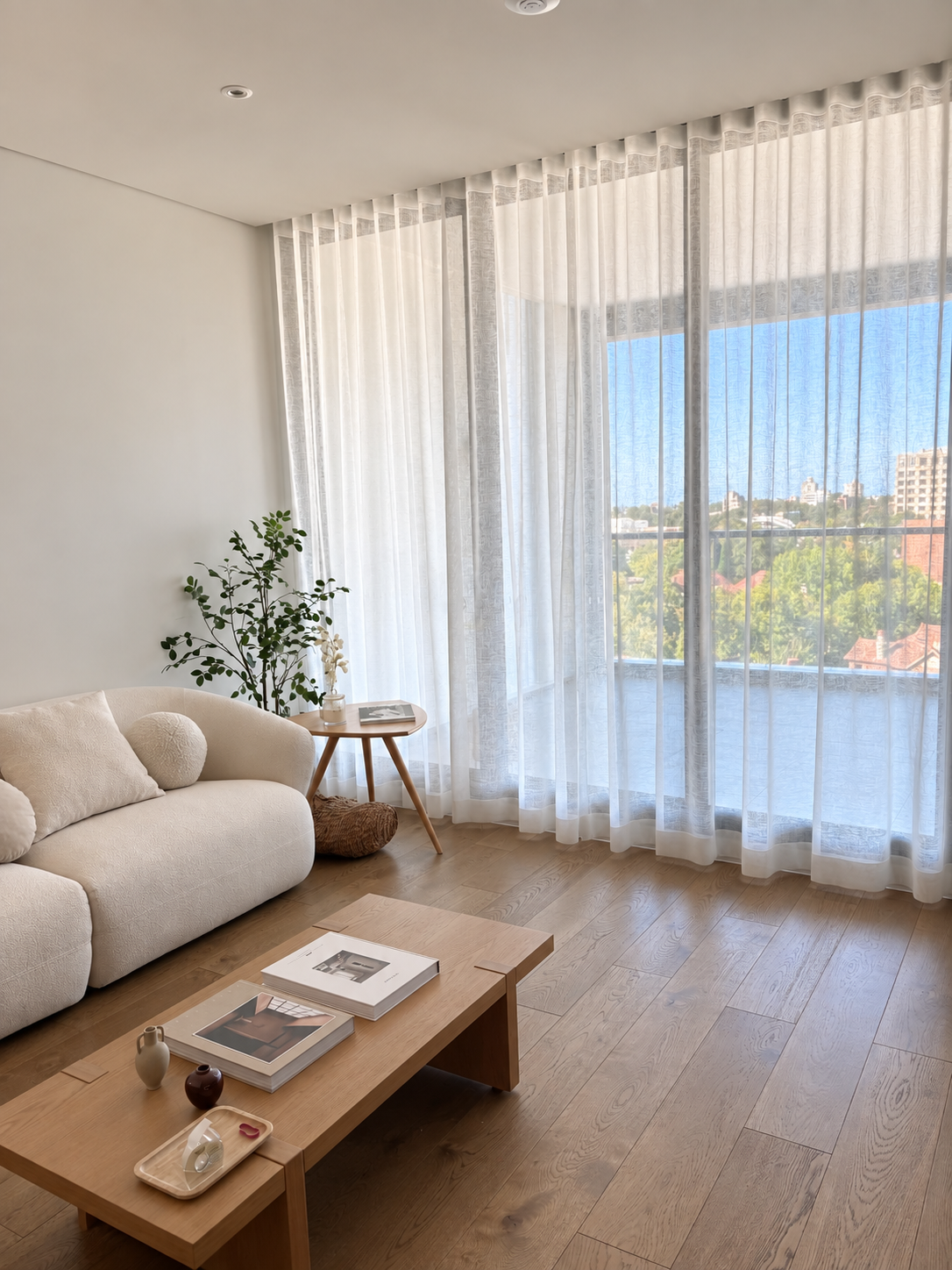
Walk through any display home in Melbourne or Sydney right now and you'll notice something: curtains are back. Not the heavy drapes your parents had, but proper fabric treatments—lined, structured, often layered with sheers. They're showing up in renovated living rooms, new builds with floor-to-ceiling glass, and even in apartments where roller blinds used to be the default.
This isn't about vintage aesthetics or a nostalgia trend. It's a practical response to problems that emerged as Australian homes changed—bigger windows, open-plan layouts, hard flooring everywhere. The shift is happening because fabric solves specific performance issues that hard treatments can't address, no matter how well-engineered they are.
If you're renovating or building, understanding why this is happening helps you make better decisions about what actually belongs in your space.
The shift happened quietly (but your neighbours have noticed)
Five years ago, most new homes had roller blinds or plantation shutters. Clean lines, easy to wipe down, safe for kids. The occasional sheer might appear in a bedroom, but living areas? Hard treatments dominated.
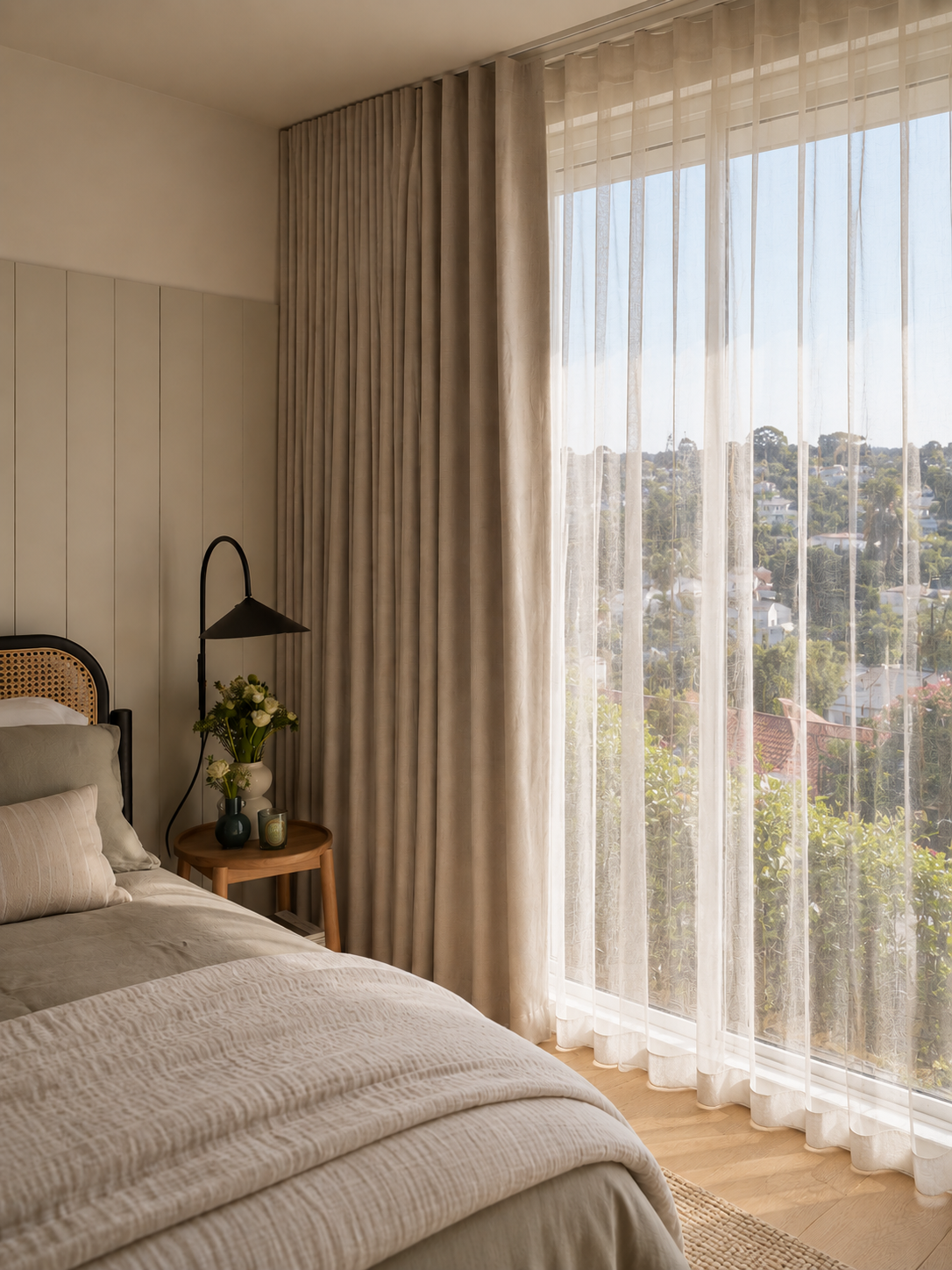
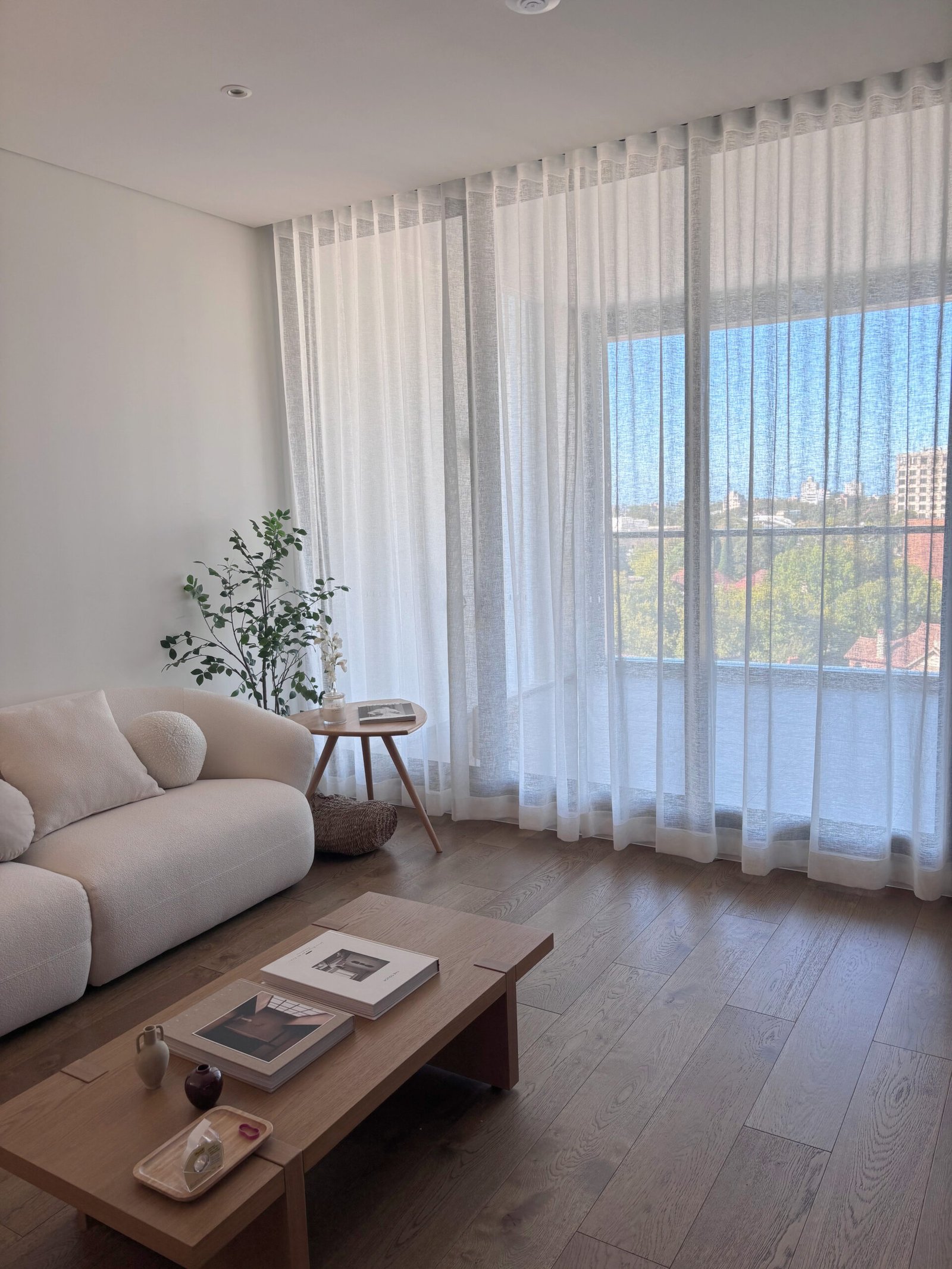
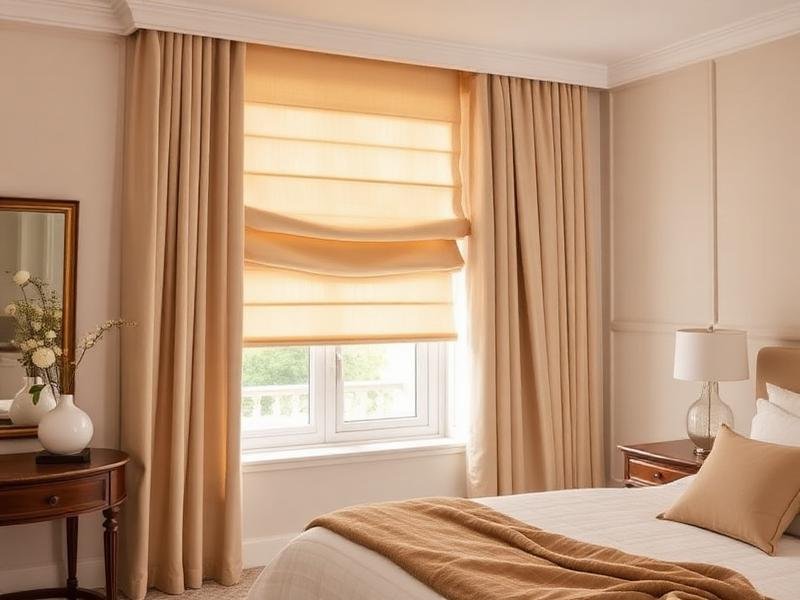
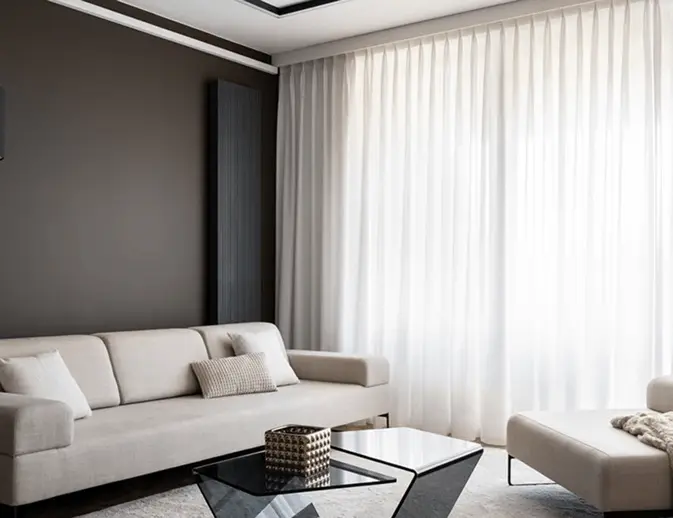
Now you're seeing full-length curtains in living rooms, often paired with blockout rollers behind them. Sheers layered over blinds in bedrooms. Roman blinds made from proper linen instead of synthetic blends. The change is most visible in renovated homes where owners have replaced what came with the house, and in display suites where builders are trying to show what modern comfort actually looks like.
It's not universal yet, but it's common enough that you notice when a space doesn't have it. Rooms with only hard blinds feel unfinished now, like something's missing even if you can't immediately name what.
What hard blinds solved (and what they cost us)
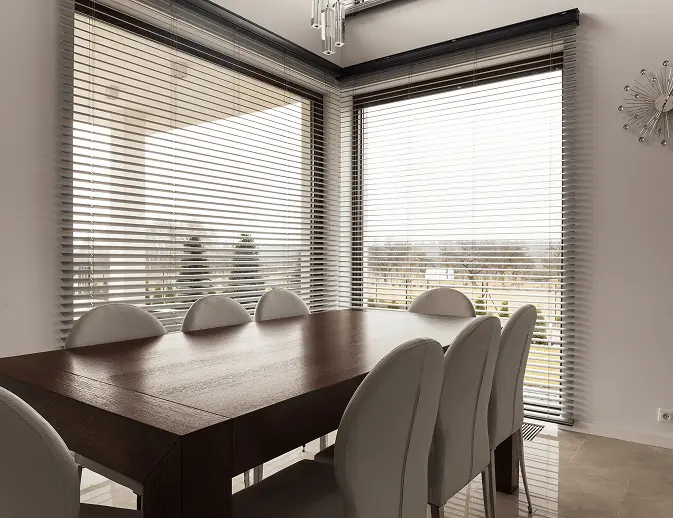
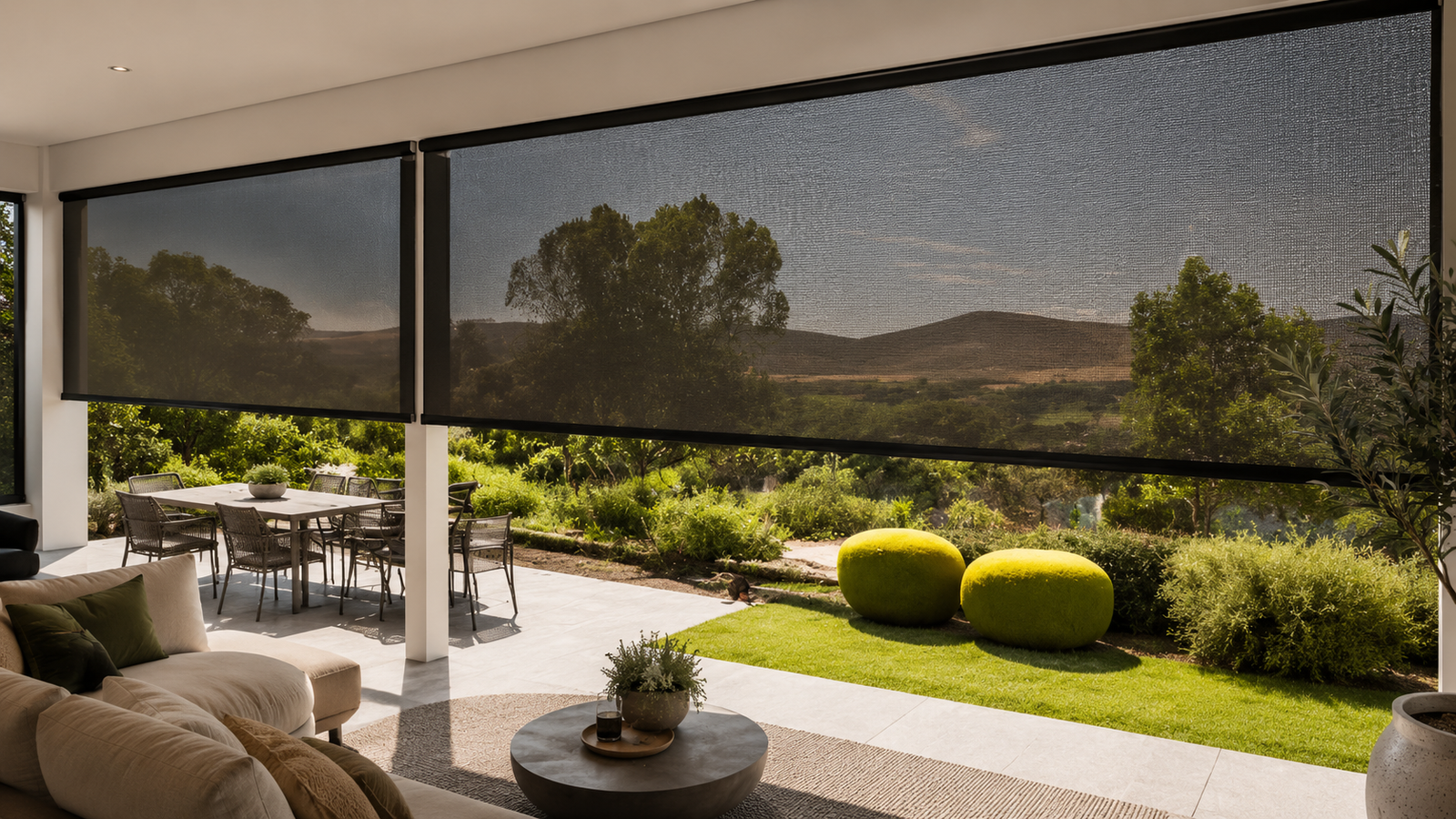
Hard treatments earned their place. Roller blinds are genuinely easier to clean than fabric—wipe them down and you're done. They're safer around young children because there are no cords to tangle. They block UV effectively, which matters when you're trying to protect furniture and flooring. They last years without fading or wearing out.
But we gave up things to get those benefits. Sound absorption disappeared—fabric absorbs noise, hard surfaces bounce it around. Thermal mass went away—layered fabric creates insulating air pockets that single-layer blinds can't match. Visual softness vanished, which didn't matter much in smaller rooms but becomes obvious in open-plan spaces. And we lost the ability to layer treatments for different times of day, which is how you actually control light in rooms with large windows.
This trade-off made sense when Australian homes were smaller and more compartmentalised. As we moved to open plans, polished concrete, and walls of glass, the things we gave up started to matter more than the things we gained.
Why fabric is winning back renovators in 2026
Fabric treatments are returning because they address three specific performance gaps that hard alternatives simply can't solve. These aren't aesthetic preferences—they're functional problems that emerged from how we've been building and living for the past decade.
Acoustic performance in open-plan homes
Open-plan homes with hard flooring, hard window treatments, and hard ceilings create echo chambers. Sound bounces off every surface, which is why conversations during dinner parties get progressively louder, and why you can hear every toy your kids drop from three rooms away.
Fabric absorbs mid-to-high frequency sounds—the frequencies that make spaces feel harsh and echoey. It won't fix bass issues or stop structural noise from travelling between floors, but it takes the edge off the acoustic harshness that makes large rooms feel uncomfortable even when they're not crowded.
The difference is most noticeable in living areas that connect to kitchens. Add fabric curtains to a space that previously only had roller blinds, and the room immediately feels calmer. It's not dramatic, but it's real.
Thermal efficiency that actually tests well
Layered fabric—especially when it's lined or doubled—creates insulating air pockets between the window and the room. This matters because single-layer hard blinds conduct heat readily. They block light, but they don't do much to stop thermal transfer.
The effect is most noticeable on west-facing windows and in older homes with poor insulation. You won't suddenly halve your energy bills, but you'll feel the difference on hot afternoons when the sun hits those windows directly. The room stays cooler longer, and your air conditioning doesn't work as hard.
This is a meaningful improvement, not a miracle solution. But in Australian climates where managing heat gain is a daily challenge for half the year, meaningful improvements add up.
The texture gap in minimalist interiors
Modern Australian homes tend toward minimalism: smooth walls, matte finishes, monochrome palettes. When everything is flat and uniform, spaces start to feel visually lifeless, especially in large rooms where you're looking across long sightlines.
Fabric adds depth without adding colour or pattern. It's about how light hits the material—the way it catches folds, creates shadows, changes appearance as you move through the room. This matters more as rooms get bigger, because there's more visual distance to fill and fewer objects breaking up the space. For more on how different fabric treatments can work together, our guide on Sheers By Day Blockouts By Night Layering Curtains covers practical layering approaches.
You feel this more than you see it. A room with fabric treatments feels more complete, even when the fabric is the same colour as the walls.
Choosing fabric treatments that won't look dated in five years
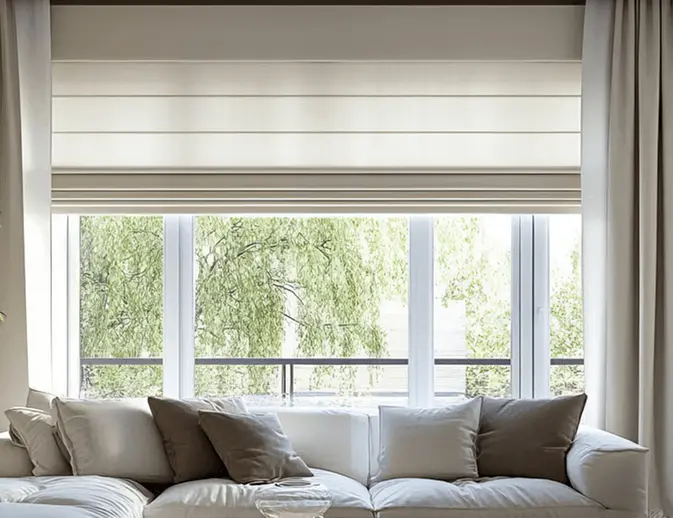
Longevity comes from getting the fundamentals right—structure and material quality—not from chasing current decorative trends. If you focus on what actually matters, you won't be replacing these treatments in three or four years when styles shift.
Avoid trend-driven details (hardware, heading styles, embellishments)
Certain details date quickly: oversized rings, decorative finials, gathered or pinch-pleat headings, contrast trim, tassels. These are the first things that look 'of a time' when trends move on.
Simple tracks, minimal brackets, and clean heading styles that disappear into the ceiling or pelmet age better. The curtain itself should be the feature, not the hardware holding it up. This doesn't mean everything should be invisible, just that hardware shouldn't draw attention.
When you look at the treatment, you should see fabric, not fittings.
Fabric weight and weave matter more than colour
Heavier fabrics—300 grams per square metre or more—drape better and last longer than lightweight alternatives. They hold their shape, resist wrinkling, and don't look cheap when gathered.
Weave affects both light filtering and durability. Tight weaves block more light and wear better over time. Loose linens have a relaxed look but won't perform as well for privacy or light control. Neutral colours in quality fabric outlast trendy colours in cheap fabric, because the material itself holds up.
Practical test: hold the fabric up to light and see how it falls when you gather it in your hand. If it looks limp or creases badly, it won't improve once it's installed.
Where to spend (and where to save)
Spend on fabric quality, proper lining, and accurate measuring and installation. These determine how the treatment performs and how long it lasts. Poor installation ruins good fabric—wrinkles, uneven hems, gaps that let light through. But good installation can't save poor fabric that fades, sags, or looks cheap from day one.
Save on decorative hardware, brand names when generic options are identical, and custom colours when stock neutrals work fine. These don't affect performance, and the savings are substantial.
The hierarchy matters more than the budget. Get the priorities right first, then decide what you can afford within that framework. If you're considering different styles, our comparison of Modern Vs Classic Roman Blinds Which One Suits Your Home might help clarify what works for your space.
This isn't nostalgia — it's a correction
This shift is happening because fabric treatments solve functional problems that emerged as Australian homes evolved. Acoustic harshness in open plans. Thermal inefficiency on large windows. Visual flatness in minimalist interiors. These are real performance gaps, not aesthetic preferences.
Hard treatments solved genuine problems when they became popular, and they still have a place. But they can't address everything, and the things they can't do have become more important as our homes changed.
For your renovation, this means choosing based on what your specific space needs, not what's currently trending. If you have hard floors, open plans, and large windows, fabric treatments will likely perform better than hard alternatives. If you need easy maintenance and have small children, hard treatments might still be the right choice. The point is to match the solution to the actual problem, not to follow what's popular.
The fabric comeback isn't about going backwards. It's about recognising what works and what doesn't in the homes we're actually living in now. For more insights on window treatments and home design, visit our Blog.