

How to Layer Window Treatments for Privacy, Light Control and Style
A single window treatment can't handle morning light, midday privacy, and night-time darkness all at once. You end up compromising. Either you're closing blackout curtains at 3pm just to watch TV without glare, or you're waking up to harsh sunlight because you need privacy from the street.
The solution isn't buying more expensive curtains. It's building a system that solves all three problems without making your windows look cluttered. This works for any room and any budget level. You just need to understand which layers do which jobs.
Why One Layer Never Solves the Whole Problem
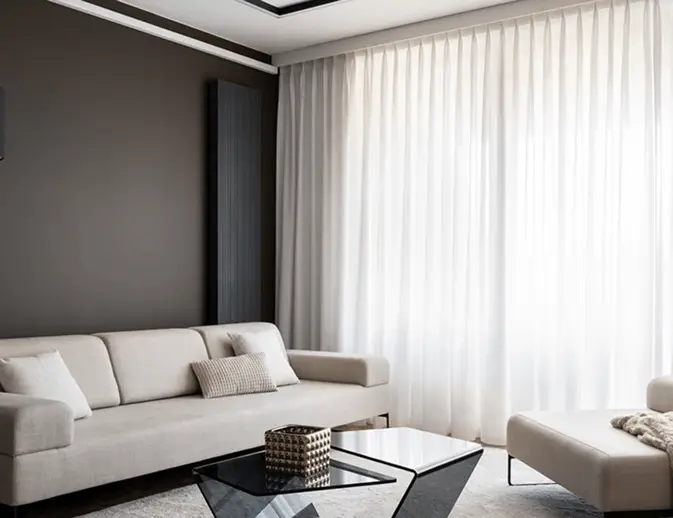
Single-layer treatments force you to choose. You can have privacy, or light, or darkness. Not all three.
Blackout curtains give you darkness but kill your morning light. Sheers give you soft light but no privacy after dark. Bare windows flood the room with glare and UV damage to your furniture and floors.
This isn't a minor inconvenience. It's a daily frustration that affects how you use every room in your home. You shouldn't have to sit in a cave at lunchtime or wake up squinting.
The Three Jobs Your Windows Need to Do
Your windows have three distinct needs that happen at different times of day. No single product can do all three jobs well. Understanding this is the first step to fixing the problem.
Morning light without the glare
The ideal is soft, diffused light that wakes you gently without screen glare or furniture fading. You want natural light, but not the harsh kind that bounces off your laptop or bleaches your sofa.
Blackout curtains can't do this. They're either open (full glare) or closed (darkness). Bare windows can't do it either. They let in everything, including the UV rays that damage wood floors and fabrics.
Privacy that doesn't kill your view
Midday is when you need privacy from neighbours without sitting in a cave. You're working from home, or relaxing in the living room, and you don't want people looking in. But you also don't want to lose your view or turn on lights at 2pm.
Success looks like being able to see out whilst others can't see in. That's harder than it sounds with a single layer.
Complete darkness when you need it
Bedrooms and media rooms need proper darkness. Light leakage ruins sleep and makes watching anything on a screen frustrating. Sheers and light-filtering options can't deliver this, no matter how you adjust them.
Not every room needs this. But where you do need it, half-measures don't work.
The Day-to-Night System: What Goes Where
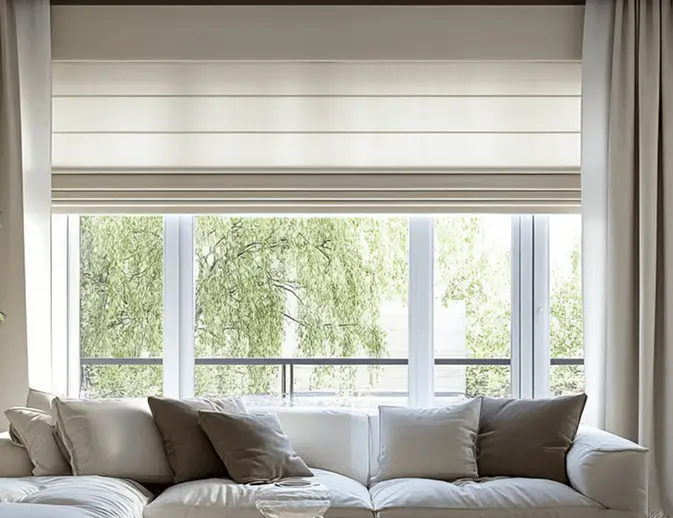
The three-layer framework is flexible, not rigid. Not every window needs all three layers. It depends on the room and what you're trying to solve. Think of these as building blocks you can mix and match.
Layer 1: Your light filter (sheers or solar shades)
This is your daytime layer that stays closed most of the time for soft light and basic privacy. It diffuses harsh sunlight and manages solar heat gain without blocking your view entirely.
Sheers work for traditional styles. Solar shades work for modern or minimal looks. The choice is aesthetic, but the function is the same.
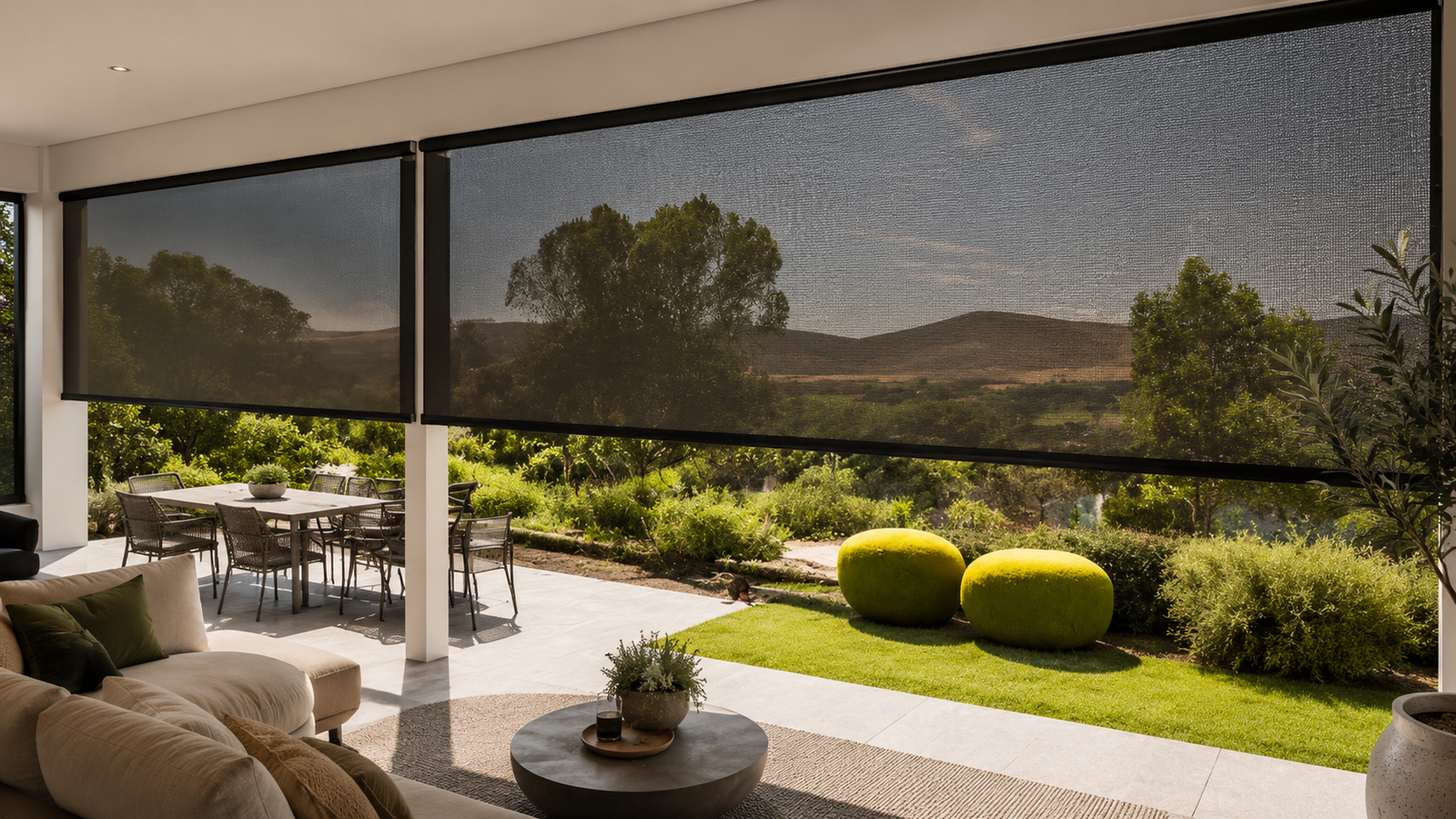
For solar shades, fabric opacity matters. 5-10% openness gives you views with light filtering. 1-3% gives you more privacy whilst still letting light through. Pick based on how exposed the window is.
Layer 2: Your privacy and blackout layer (blinds or lined shades)
This is the workhorse. It handles privacy and darkness when you need it. Roller blinds, Roman shades, or Venetian blinds all work, depending on your style preference. For more on choosing between styles, our Modern Vs Classic Roman Blinds Which One Suits Your Home guide covers the differences.
This layer sits behind or inside the window frame, not in front. It's functional, not decorative. When you need privacy or darkness, you pull it down. When you don't, it disappears.
Layer 3: Your style layer (curtains or drapes)
This is the optional decorative layer that adds colour, texture, and visual height. It's often left open, framing the window rather than covering it.
In bedrooms, this can double as extra insulation and light blocking when closed. In living rooms, it's mostly there to look good.
Some rooms look great without it. Don't force it if your windows already look finished.
Room-by-Room Combinations That Actually Work
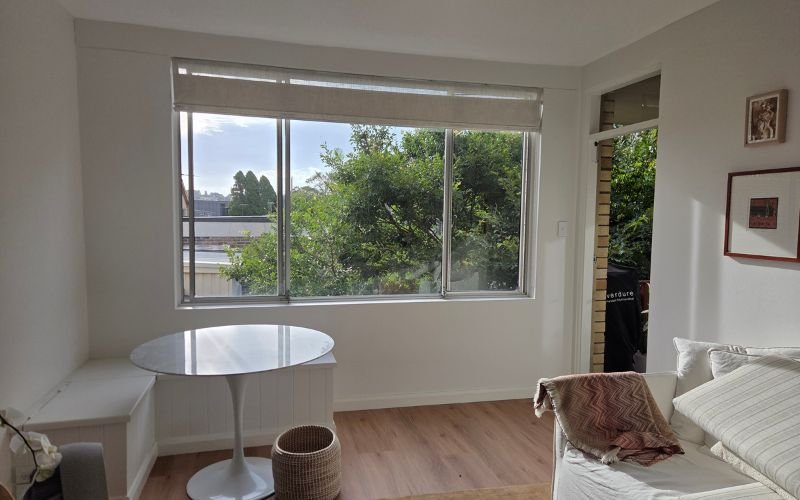
These are tested combinations that solve the specific problems each room faces. You can adapt them based on your priorities and budget.
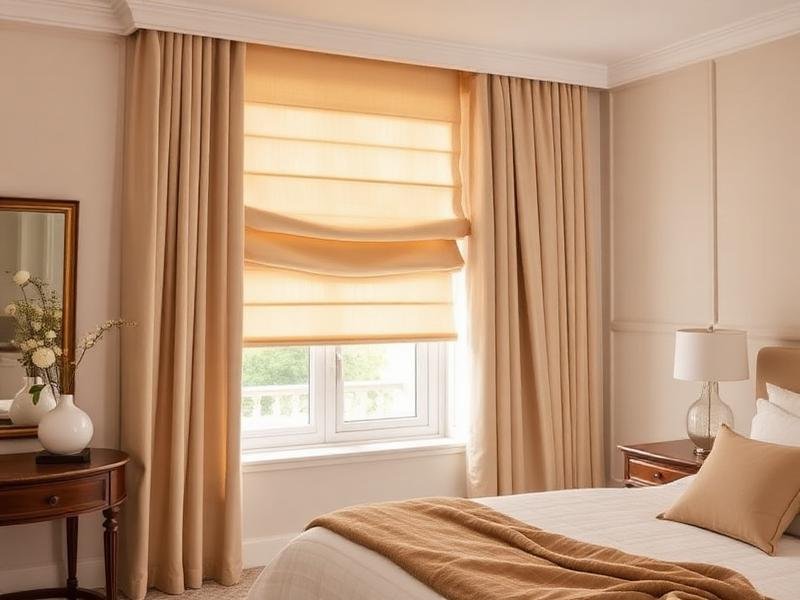
Bedrooms: Motorised blackout shades with linen curtains
Motorised blackout roller shades give you complete darkness. Linen curtains add softness and style. Raising the rod 6-8 inches below the ceiling creates a luxurious feel and makes the room look taller.
Motorisation means you can open blackout shades without getting out of bed. It's worth it if you can stretch the budget.
Budget alternative: manual blackout shades with ready-made linen curtains. Same effect, less convenience.
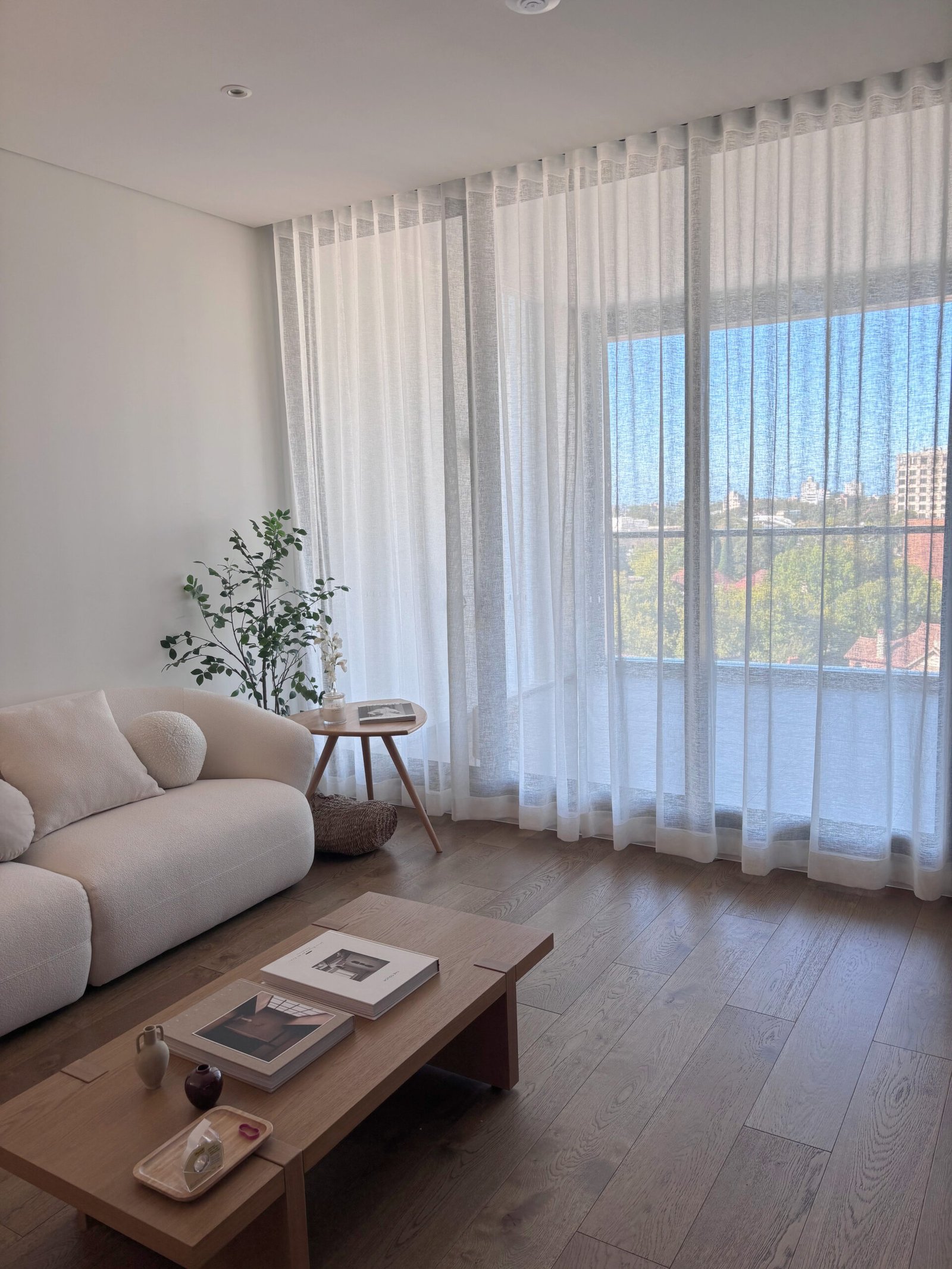
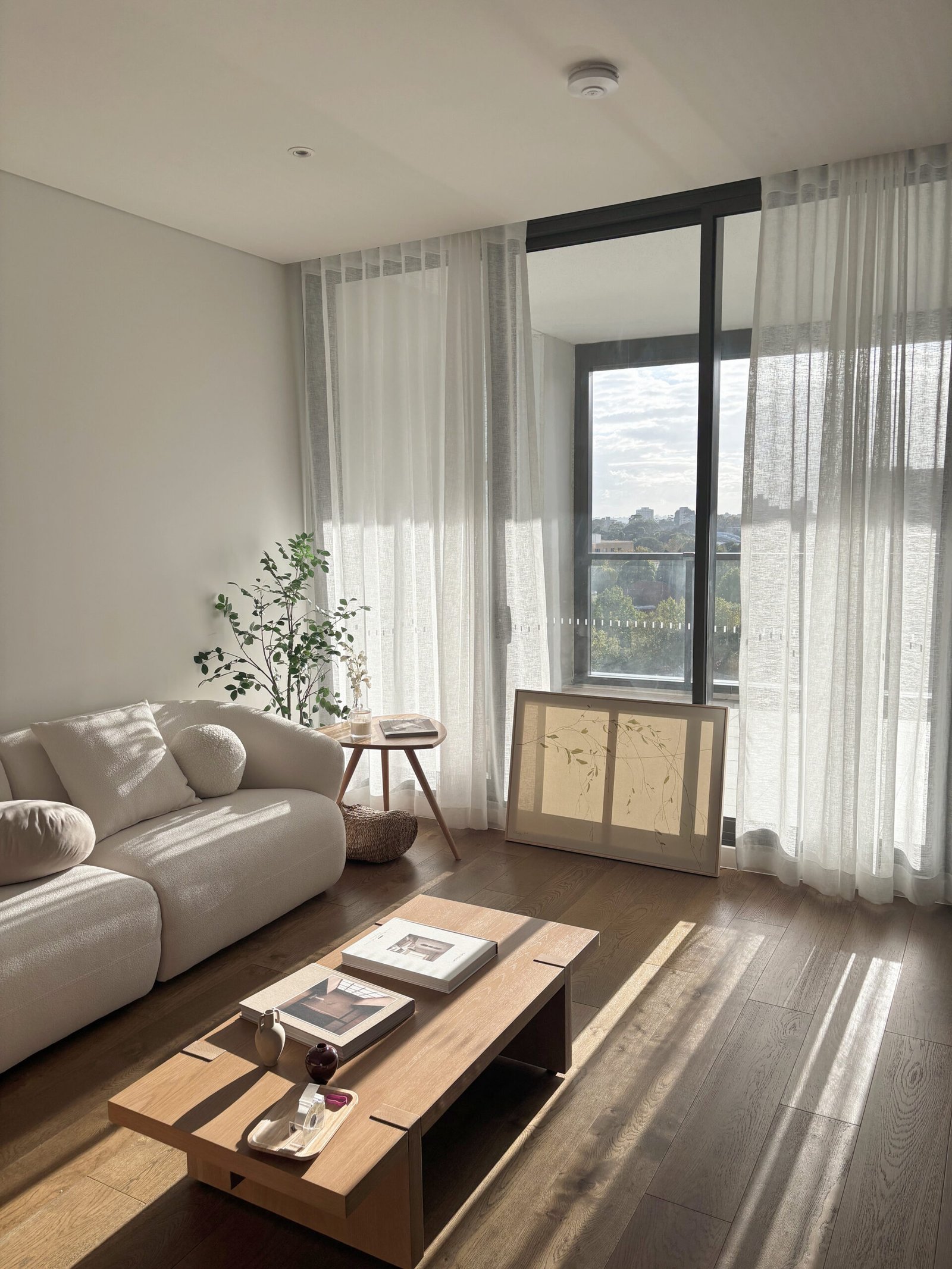
Living rooms: Sheer curtains with solar roller blinds
Solar roller blinds control glare during the day. Sheer curtains add softness and frame the window. The blinds do the functional work whilst curtains add the style.
Leave the curtains open most of the time. Pull them closed only for evening privacy or insulation. This combination protects your floors and furniture from UV damage without making the room feel closed off.
Bathrooms and wet areas: Shutters with privacy film
Shutters are moisture-resistant and their adjustable louvres give you light and privacy control. Add frosted or decorative window film for street-facing windows where you want permanent privacy.
Shutters are easy to maintain and offer good operability. This combination works for kitchens and laundries too.
Making It Look Intentional, Not Overdone
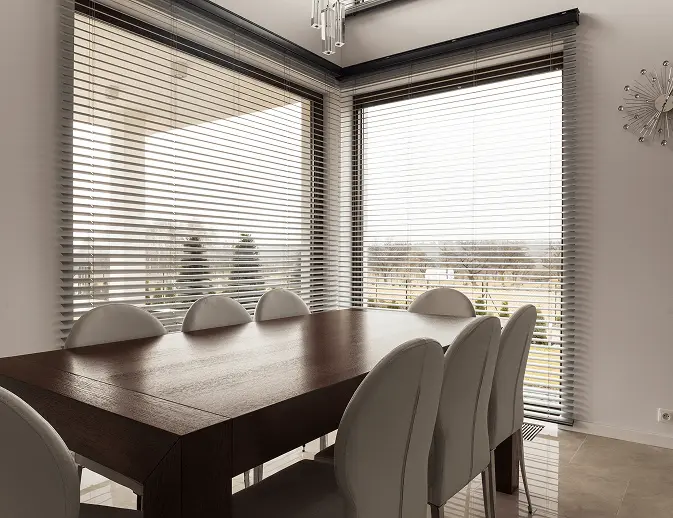
Layering sounds like it could look cluttered. It won't if you follow simple design rules that make multiple layers look planned and sophisticated.
The mounting trick that adds height without bulk
Mount curtain rods as close to the ceiling as possible, not just above the window frame. This creates vertical lines that make rooms feel taller without adding visual weight.
Blinds or shades sit inside or just outside the frame. Curtains hang from ceiling height. The contrast in mounting positions is what makes the system work visually.
When to match colours and when to contrast
Match your functional layers (sheers and blinds) to the wall or trim colour so they disappear. Use your curtain layer for colour, pattern, or texture that ties into the room's scheme.
If you want curtains to be a feature, keep the other layers neutral. If curtains are neutral, the layers won't compete. White or cream sheers work with almost everything. Don't overthink it.
Your Windows Work All Day Now
You can now have soft morning light, midday privacy, and complete darkness without compromise. You don't need to layer every window. Start with the rooms where single treatments frustrate you most.
Mix and match the system based on your specific needs and style. The framework is simple. The results are immediate.